
Total Days: 5.5 days
Total Kilometres: 95 kilometres
Total Portages: 25
Total Length of Portages: 13.310 kilometres
Longest Portage: 1.790 kilometress (Osler Lake to Nadine Lake)
Average Daytime High: 9.5 Celsius
Average Nighttime Low: 1 Celsius
Route: Kioshkokwi Lake – Maple Creek – Maple Lake – Erables Lake – Skuce Lake – Little Nadine Lake – Little Osler Lake – Osler Lake – Nadine Lake – Nipissing River – Cedar Lake – Little Cedar Lake – Aura Lee Lake – Laurel Lake – Little Cauchon Lake – Cauchon Lake – Mink Lake – Little Mink Lake – Kioshkokwi Lake
Maps Used: Chrismar Algonquin 2 (Northwest) and Friends of Algonquin Park Map (2007 version)

Algonquin Provincial Park really needs no introduction. It’s Ontario’s largest Provincial Park easily accessible by car, with the majority of provincial residents able to drive there in a day. Though rich in natural history, arguably Algonquin Provincial Park’s human history is even more interesting, and with a little bit of research before heading out you can locate what remains from these relics of the past. Presently family owned cottages still remain on lease remain within the park. Also within the park boundary are a couple of abandoned railways with ghost towns along its route, old roads, dams, log chutes, abandoned machinery and settlements from the logging days, and even POW camps from World War II! Though you can’t see it from the highway, or even from Algonquin’s lakes and portages, logging continues in the park today amid controversy.
Algonquin Provincial Park sets a transitional stage between the deciduous forests of the south and the coniferous forests of the north where larger mammals such as Moose, White-tailed Deer, Beaver, and Fisher make their home. Birds include some Boreal forest species like Spruce Grouse, Black-backed Woodpecker and Boreal Chickadee. The park is also one of the oldest provincial parks in Canada, founded in 1893.
We decided to try a fall camping trip this year with the hopes of taking in some fall colours, some cooler temperatures, and hopefully less canoe traffic.
We headed up to the beautiful city of Huntsville and over to the Algonquin Outfitters to pick up our canoe. Our canoe this year is a 42 pound Kevlar based Swift Kipawa at 16.5 feet long. Unfortunately, it was at the outfitter that we realized we forgot our PFDs and strappings at home. Fortunately for us they are both provided by the Algonquin Outfitters.
Turning right at North Bay, we headed east down highway 17 on our way to enter the park from the north end. We turned south down road 630 for 24.5 kilometres to the Kiosk campground and arrived at our car camping spot at around 5:15pm. We quickly made camp and supper before it got too dark and realized that while planning for this trip we forgot to consider how soon it gets dark now in October, by 6:45pm. Hopefully it won’t affect the trip too much.
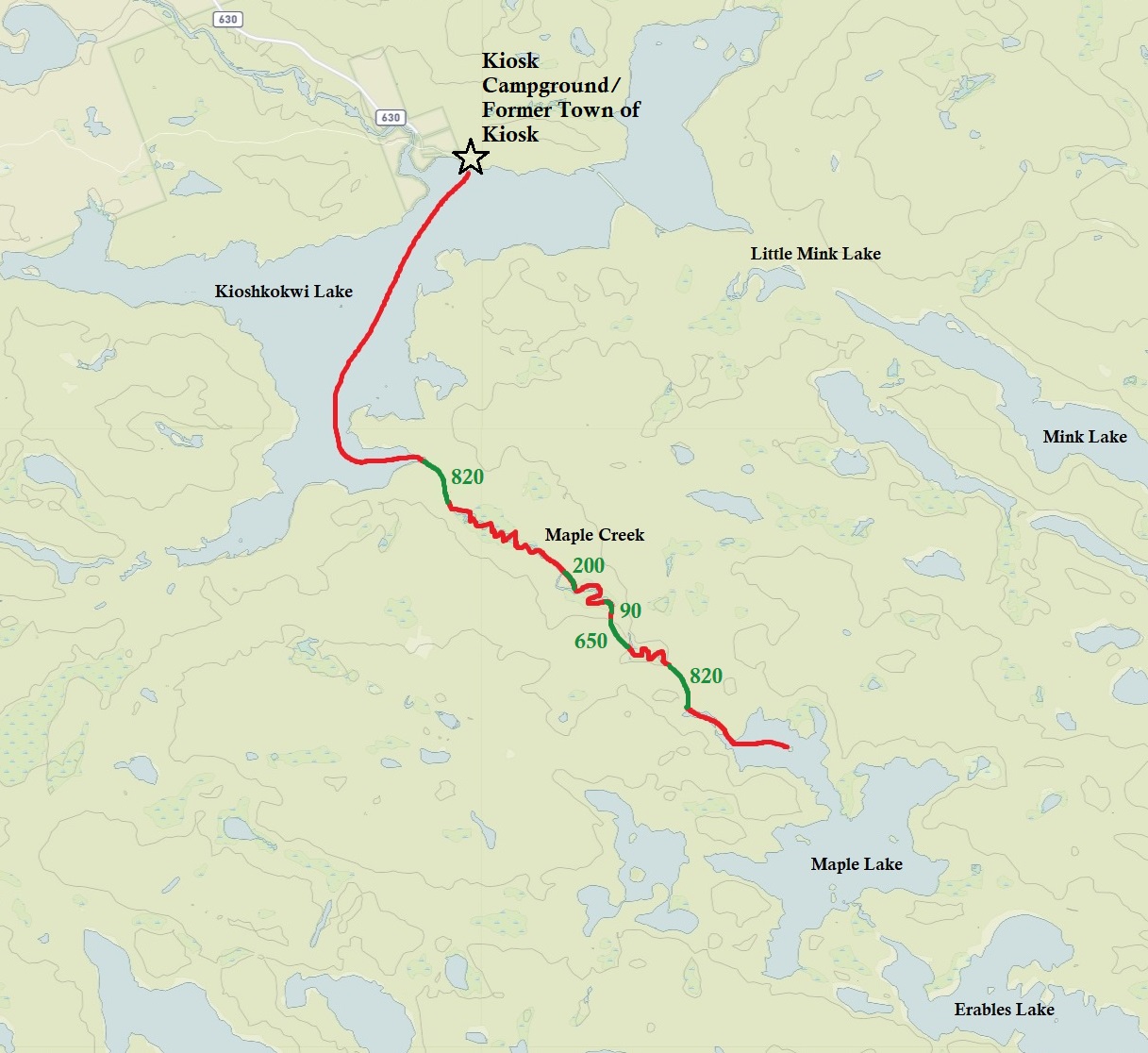
DAY # 1: Kiosk Launch to Maple Lake
Weather: Sunny and windy. High: 15C Low: -2C
Happy Thanksgiving!
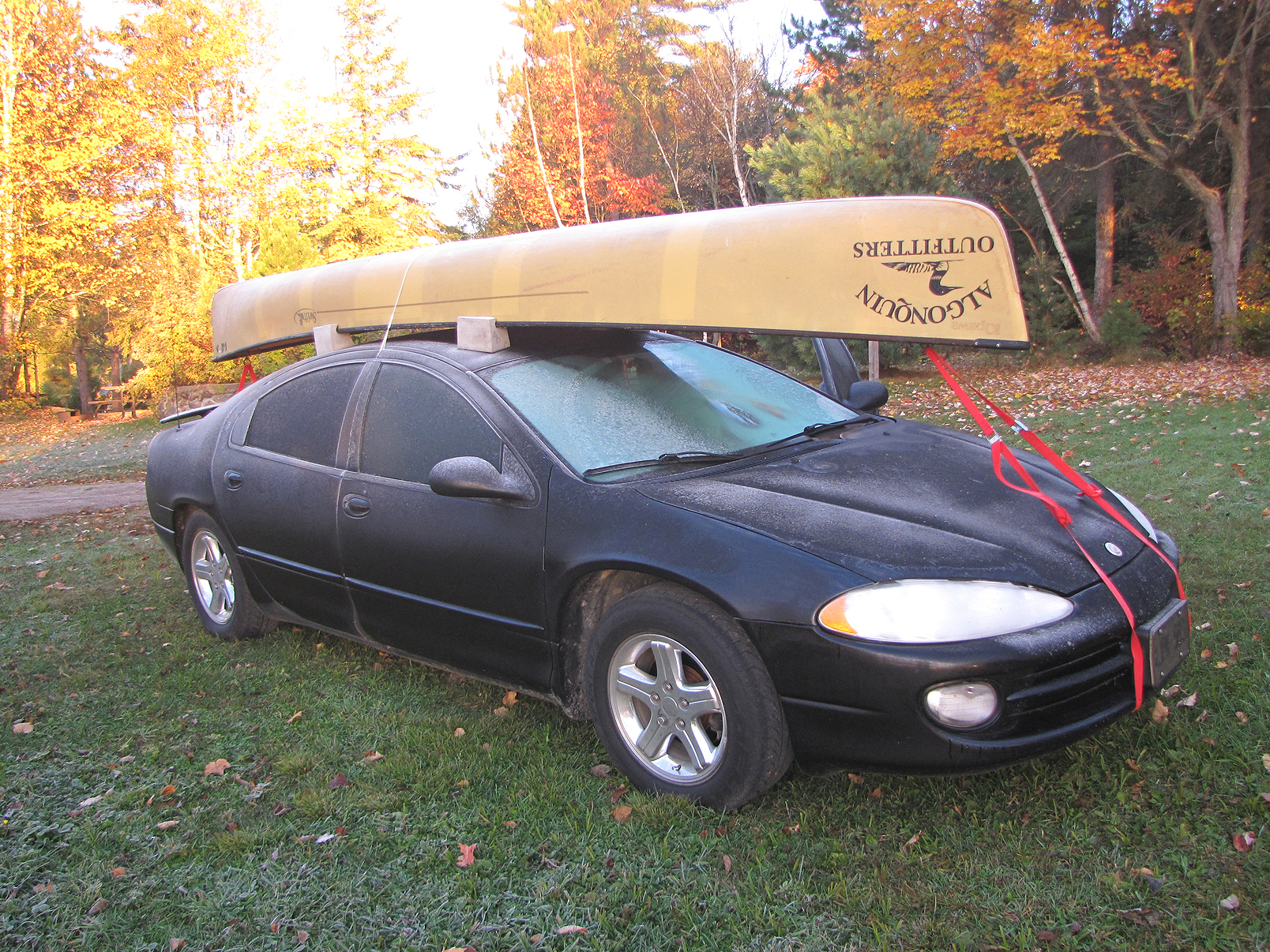
We woke up many times during the night, tossing and turning and listening to whatever was walking by our tent. The morning revealed frost on the car along with the canoe that was still strapped on top. We made a fire to warm up and had our breakfast which was a homemade dehyde consisting of oats, apples, apricots and blueberries. As we were making our way to the launch we noticed a sign stating that the big game hunt was starting soon and that paddlers should wear bright coloured clothing……we definitely didn’t have any packed.
We launched pretty late this morning at 10:15am on Kioshkokwi Lake (the name meaning “lake of many gulls” in Algonquin) and was it ever windy! We had to paddle pretty hard to get any forward momentum while the bow of the canoe kept bouncing off the waves. Once we reached Maple Creek it got a lot calmer.
Today’s portages were fairly simple with 6 in total. Along a portage we met a group of six more canoeists who were on their way out. We also saw a male Ruffed Grouse displaying along the portage.

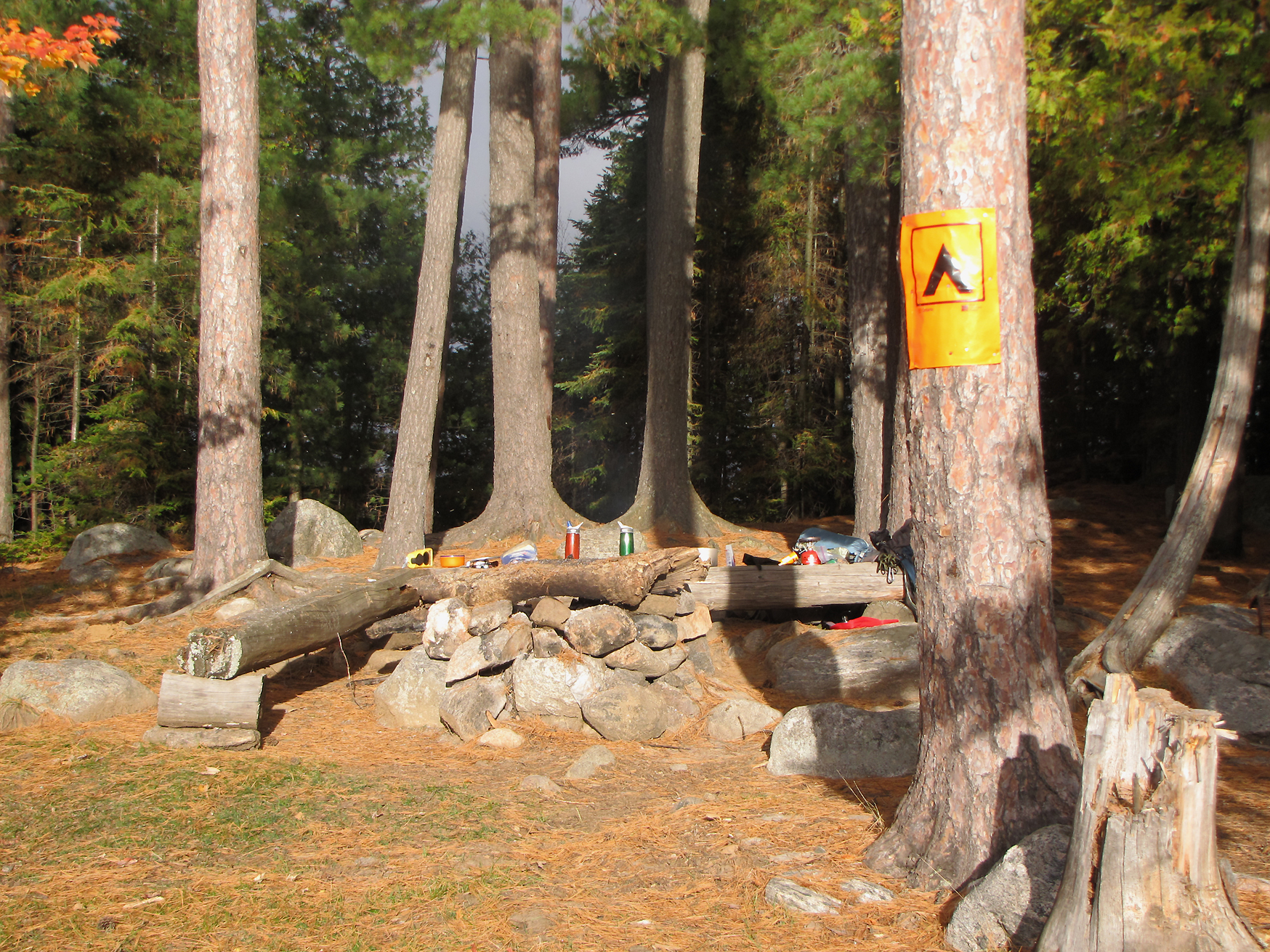
We arrived at our site, which was on a small island on Maple Lake at around 5pm. This gave us time to pump clean water and make another great fire for the evening with spaghetti on tonight’s menu.
Wildlife Sightings: Canada Goose, Common Loon, Northern Raven, Red Squirrel, Swamp Sparrow, Black-capped Chickadee, White-breasted Nuthatch, Moose Tracks, People, Ruffed Grouse, Hairy Woodpecker
Remember to: No remember to for today
DAY # 2: Maple Lake to Little Osler Lake
Weather: Sunny in the morning, cloudy in the afternoon. Calm. High 13C Low: 5C
While we had breakfast this morning we heard the call of a moose. Moments later, a fair ways out in the distance we observed three. One of the Moose even crossed the lake.
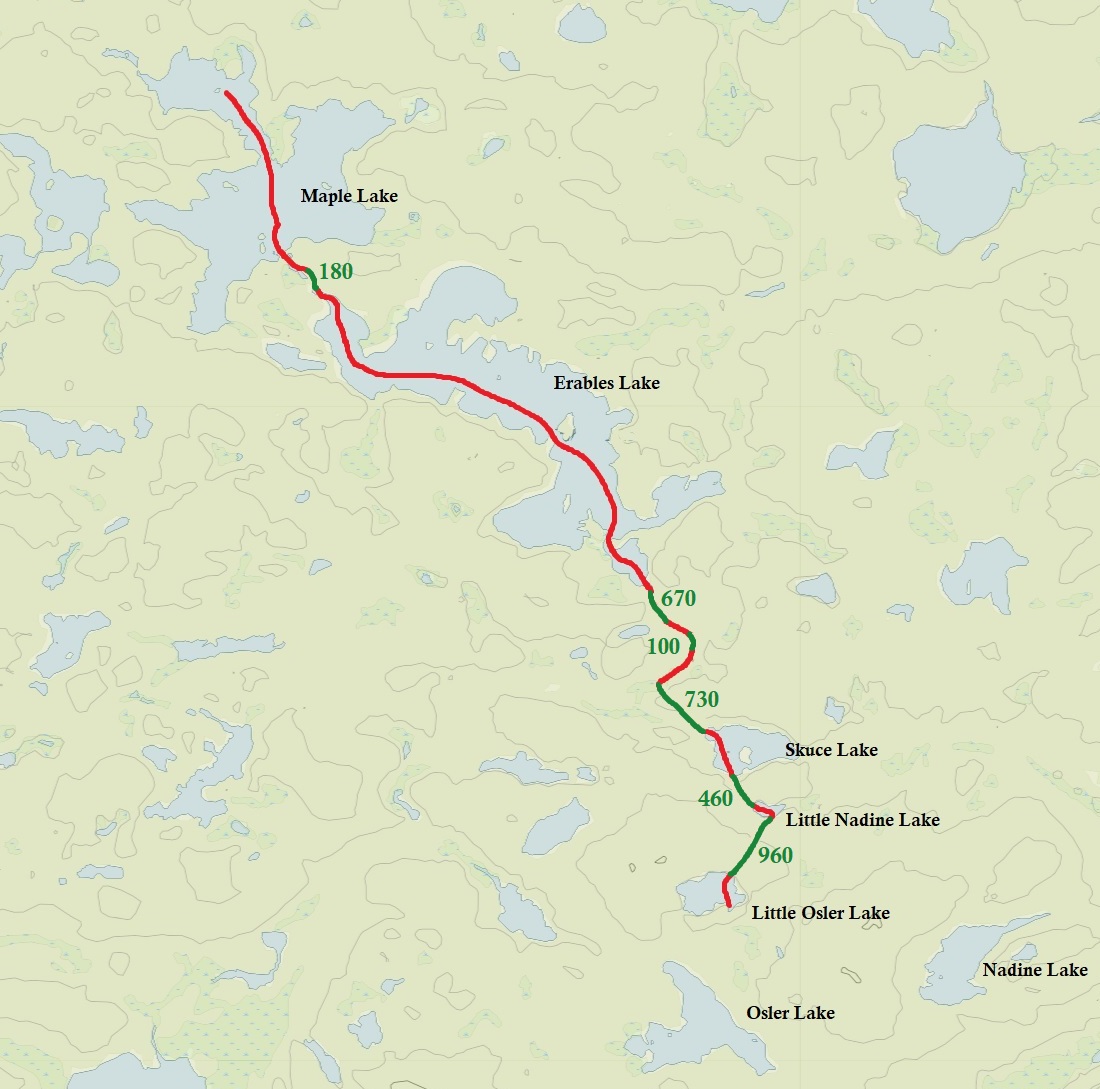
We had a nice paddle through Maple Lake, and then into Erables Lake (Erables meaning “maple” in French).
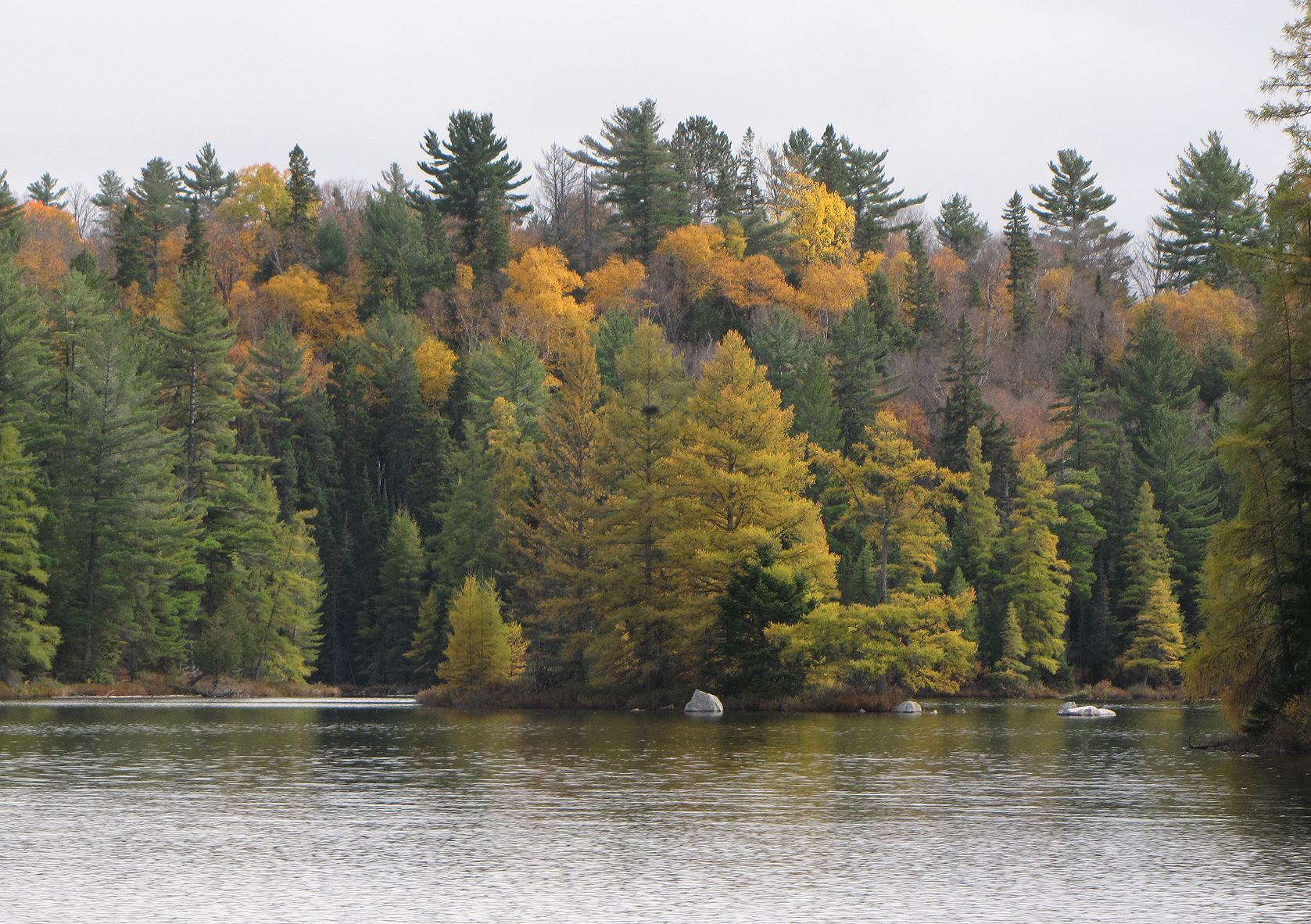
The portages today were many including one steep and grueling one at 1,230 metres that went from Little Nadine to Little Osler. Through all this excitement, Marianne went above her ankles in muck at the beginning of the portage which filled her boots and soaked her socks.
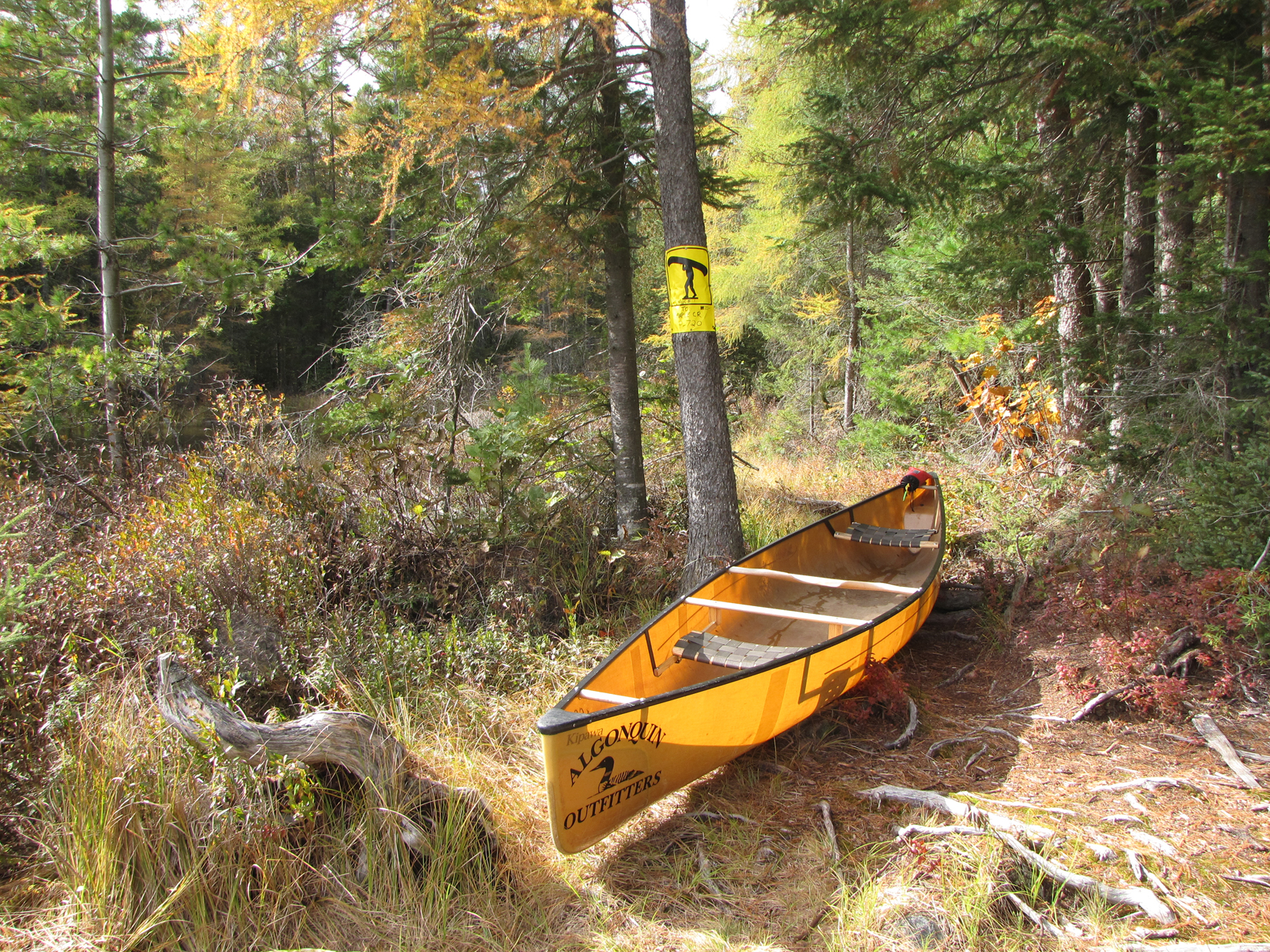
We got to our campsite on Little Osler Lake later than we expected (which would become routine on this trip) with just enough time to gather firewood, put up our tent, and hang our pack. Marianne tried to dry her soaked socks over the fire but instead she burned them to death. Oops!
Wildlife Sightings: No people, Moose, Common Merganser, Black-capped Chickadee, Grey Jay, Pileated Woodpecker, both Kinglet species, Hairy Woodpecker, Red Squirrel
Remember to: Check the elevation of the portages before we leave on a canoe trip.
DAY # 3: Little Osler Lake to the Nipissing River
Weather: Sunny. High: 9 C Low: 0C
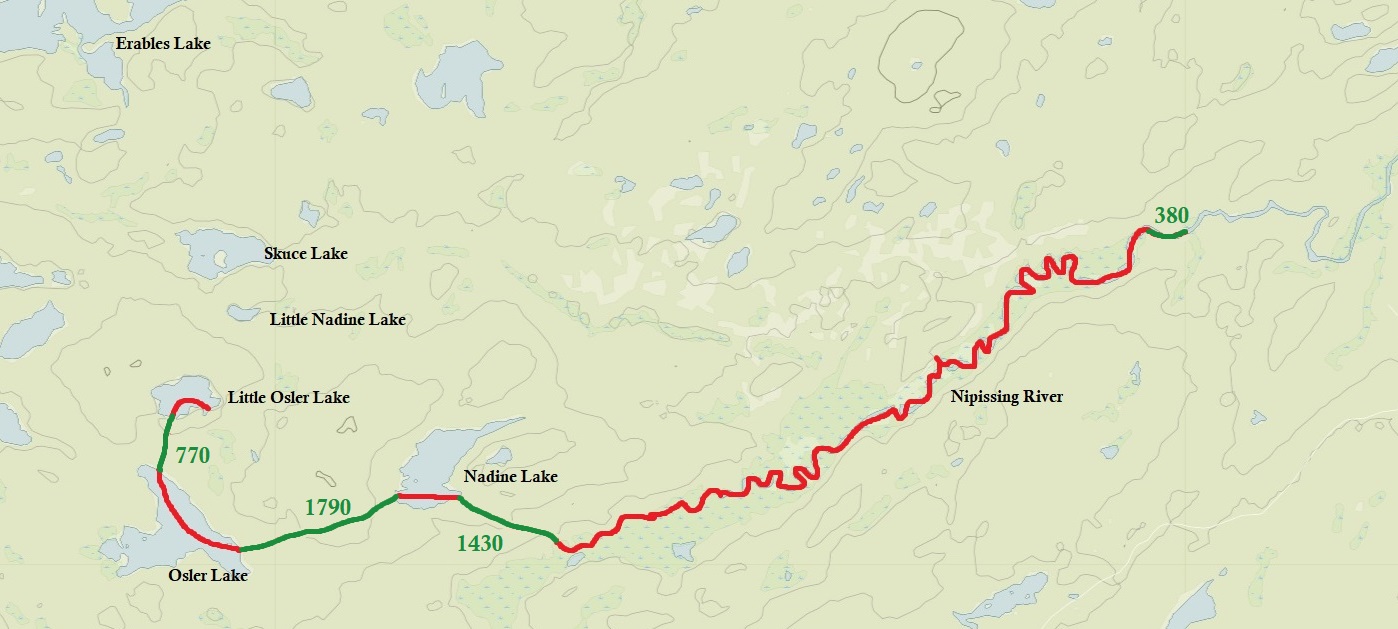
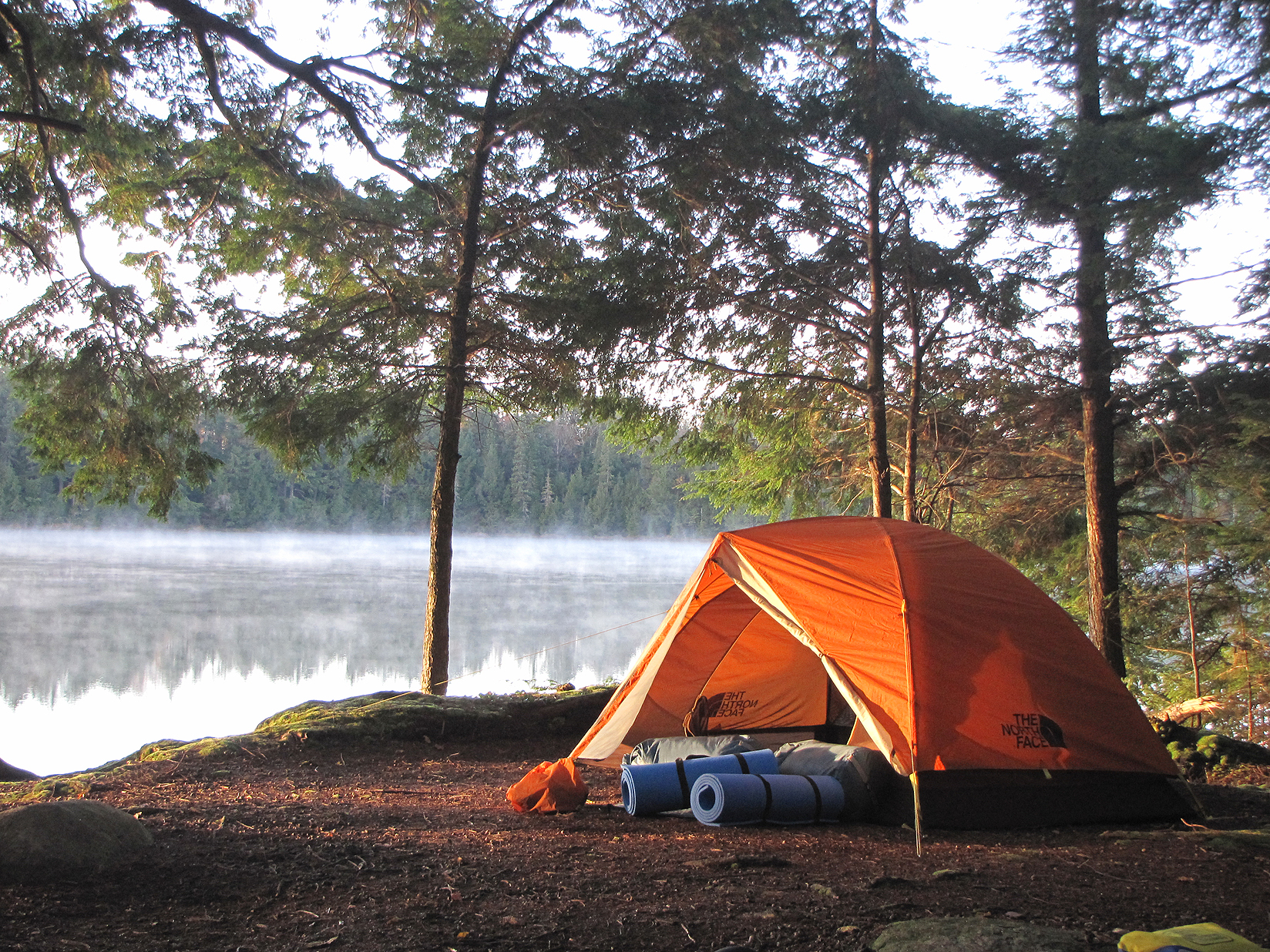
We decided to get up a bit earlier today at 7:00am because we were a little behind our scheduled route due to yesterday’s somewhat brutal portages.
We got onto the water just after 9:00am ready to take on three portages that included the two longest for the whole trip at 1,790 metres and 1,430 metres.
The first one at 1,790 metres was a little rough while the second one at 1,430 metres was actually a cake walk. Unfortunately, during this portage Aaron tripped on something and the canoe came down on top of him. Luckily he was okay.
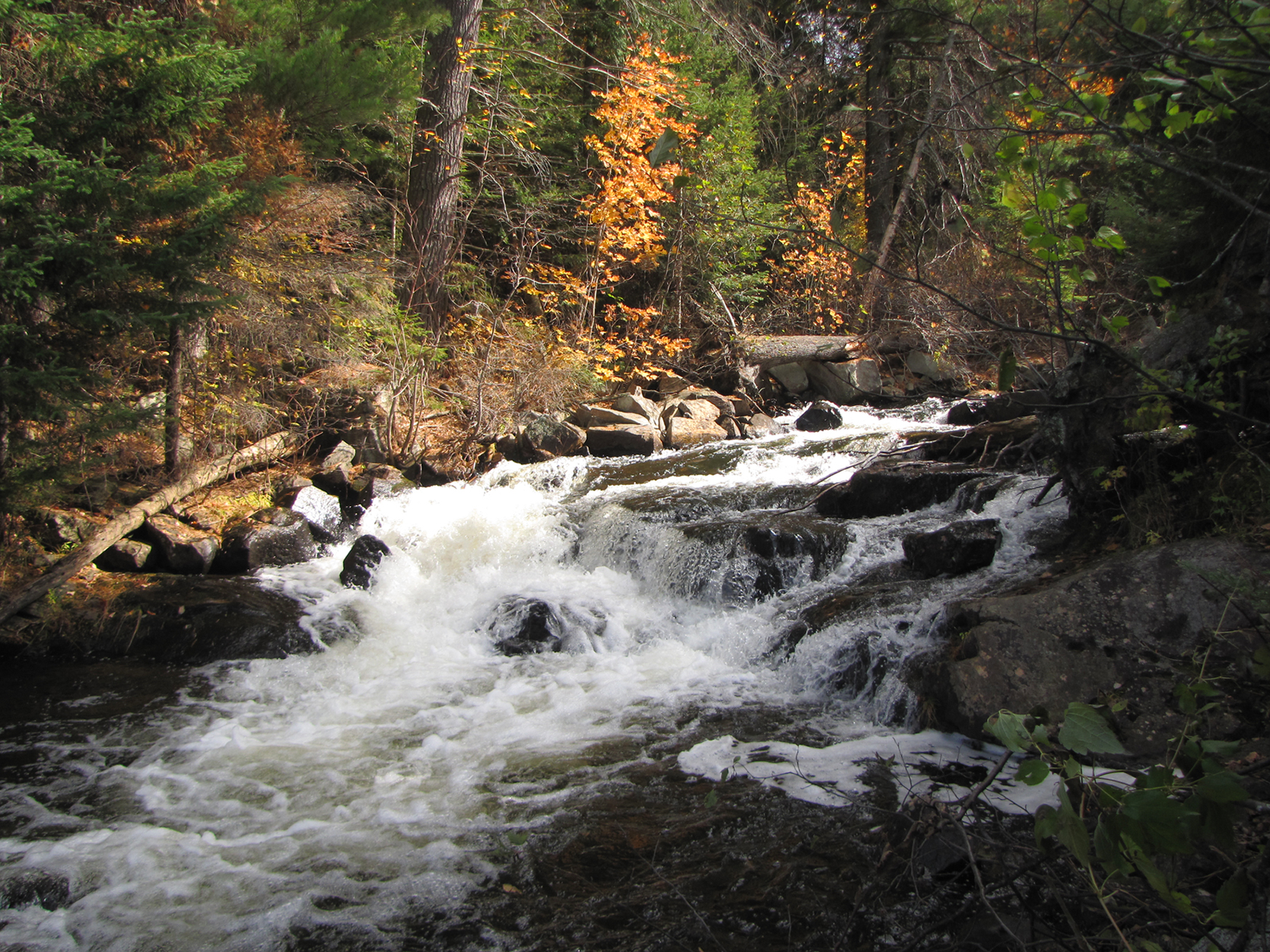
We reached the Nipissing River around 4pm. The river had many MANY twists and turns that the map doesn’t do justice for. You basically keep going left and right and right and left, and sometimes you feel like you are not making any forward progress. Along the way we saw three cow moose right along the shoreline which offered spectacular views! The water was very clear (and quite cold!) and we saw a beaver come out along the bank of the river, and a Pileated Woodpecker flew overhead. Looking up we noticed ahead of us some leaves getting blown in a circle above our heads and then the water rippled across the surface similar to a fish…It was actually a mini waterspout (if you can even call it that) and we paddled through it! Of course we cheered and said that we went through a waterspout like it was some big fish story.
Sunset approached and we continued to wind right and left and left and right along the Nipissing River. Every so often we noticed a log sticking out of the water, creating dead heads to bang you canoe off of. All the logs were of the same circumference and pretty much at the same angle. Maybe they were logs that got stuck during the logging days? There was also a Great Blue Heron which continued to fly ahead of our canoe as we rounded a few turns, like it was guiding the way for us.
We passed a few campsites right along the river but decided to continue on as we didn’t like the looks of them. It was almost dark when we portaged 380 metres and came to a site at a man made dam and set up camp. The site itself was very dark, felt quite damp, and was even a bit spooky. Curled up in our sleeping bags with the sound of rushing water was the opposite of last night’s dead calm. There isn’t even an insect to sing you to sleep in October.
Wildlife Sightings: Moose, Golden-crowned Kinglet, American Robins, Blue Jays, Hairy Woodpecker, Pileated Woodpecker, American Pipit, Beaver, Muskrat, Great Blue Heron, No people.
Remember to: Plan for less paddling and more time for relaxing at our campsite!
DAY # 4: Nipissing River to Laurel Lake
Weather: Clouds in the morning followed by afternoon showers. High: 7C Low: -7C
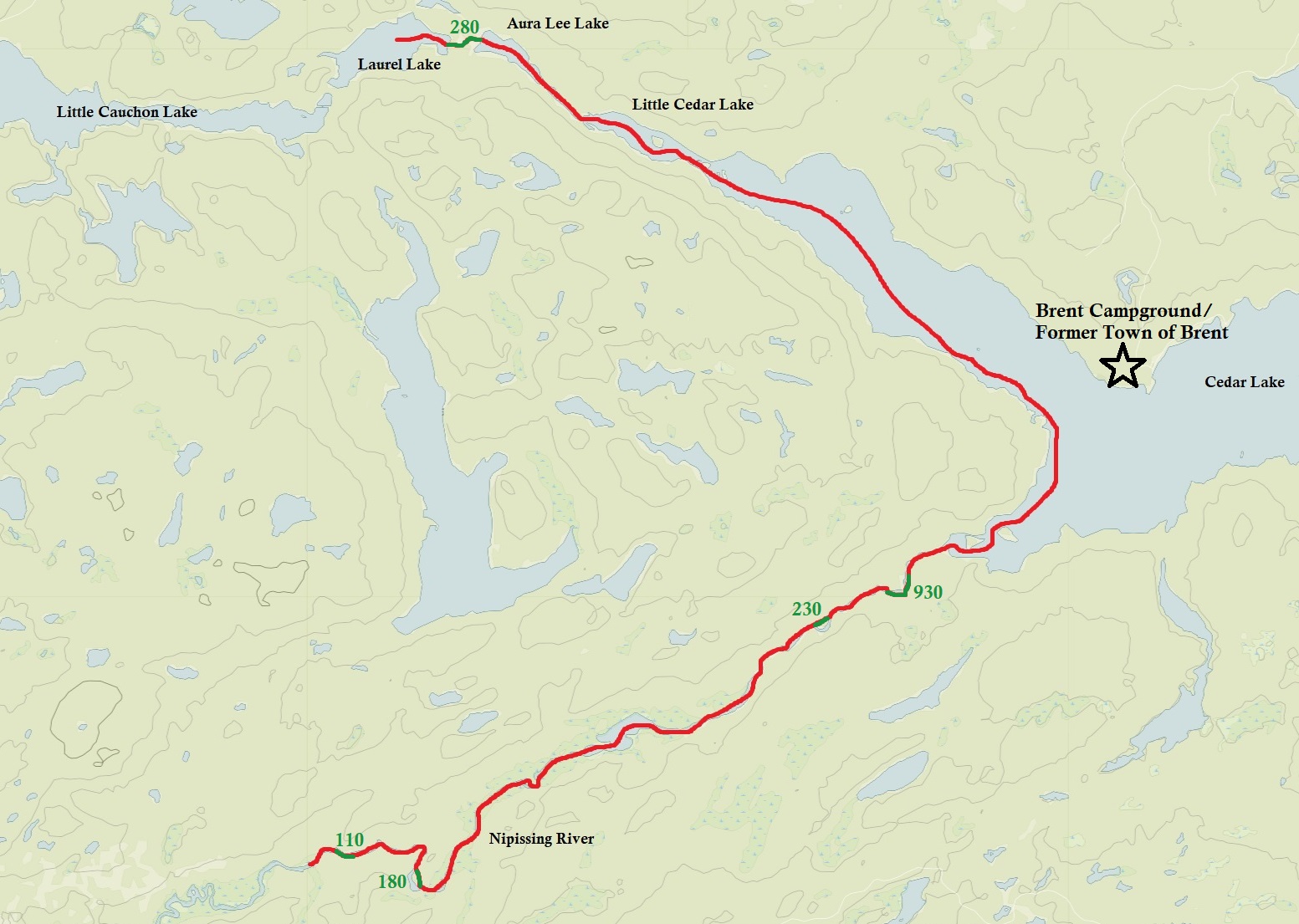
This morning we woke up at 5:15 am and could not get back to sleep! It was a chilly night next to the dam along the historic Nipissing River. At the very crack of dawn we came out of our frost covered tent. We were both quite cold as it was -7 Celsius beside the cold river. When we went to our packs to get the fuel and the water pump we saw that they were both frozen! Aaron had to put the stove in his rain coat to warm it up so we could actually make ourselves a breakfast.
We shivered while having breakfast and then began to pack up which was nice as we were moving around to keep warm. The sun came out when we slid the canoe back in the Nipissing River. A pair of River Otters checked us out and we would observe their heads appear above the current, disappear, and then reappear again a little farther downstream. Within an hour after launching from our site we arrived at another site that was a lot drier than ours, and we even had a fire which we couldn’t even attempt earlier. We got out the stove again and had a hot tea which warmed us to our toes and we felt a lot better as we were cold! As we continued down the Nipissing River we saw yet another moose as the clouds rolled in. Rain was in the forecast for today.
After a few more portages, including our last one at 915 metres, we exited the Nipissing River and entered the large expanse of Cedar Lake when it began to sprinkle a bit. Across the lake we could just make out a few cottages at the former town of Brent. Brent has some interesting history to it. It was once occupied by lumber companies, was the location of a depot farm, and had a station on the now removed Canadian National Railway. Today there are a few buildings still standing including some cottages. The Brent campground is similar to the Kiosk campground with no hydro or showers, and there is an Algonquin Outfitters store for supplies. We were thinking of making our very first visit to Brent today, but instead chose to stay close to shore where we could seek refuge in case it poured.
We ended up finding a dry spot under a tree at a site on Cedar Lake and shared a freeze dried meal plus some rehydrated butternut squash from our garden. The squash was really delicious and sweet!
Continuing in a northwesterly direction we could see to our right the now abandoned Canadian National Railway. This railway was in service from 1915 to 1995 with the tracks removed in 1996 and 1997. After a 275 metre portage we entered Laurel Lake. Tonight we camped on the small island on this smaller lake. The thunderbox was located on the very top of the island, possibly providing the most scenic views ever while we pooped. The site itself was a nice change to last night’s cold and damp river site.
Wildlife Sightings: River Otter, Hairy Woodpecker, Ducks sp., Common Loon, Ring-billed Gull, Pileated Woodpecker, Red-breasted Nuthatch, Moose, American Robins.
Remember to: Bring items into the tent at night that have the chance to freeze such as the fuel and the water pump.
DAY # 5: Laurel Lake to Mink Lake
Weather: Cloudy. High: 7C Low: 5C

Another grey sky greeted us this morning along with the sound of a gun going off as the big game hunt continued in the park. We agreed that we would be a little more vocal on the portages for the rest of the trip.
Today we had more paddling and less portaging as we continued west using the abandoned railway as a landmark. We passed some cottages where the ghost town of Daventry remains. We also saw someone out in a pickup truck, our first human sighting in a few days. Perhaps a hunter?
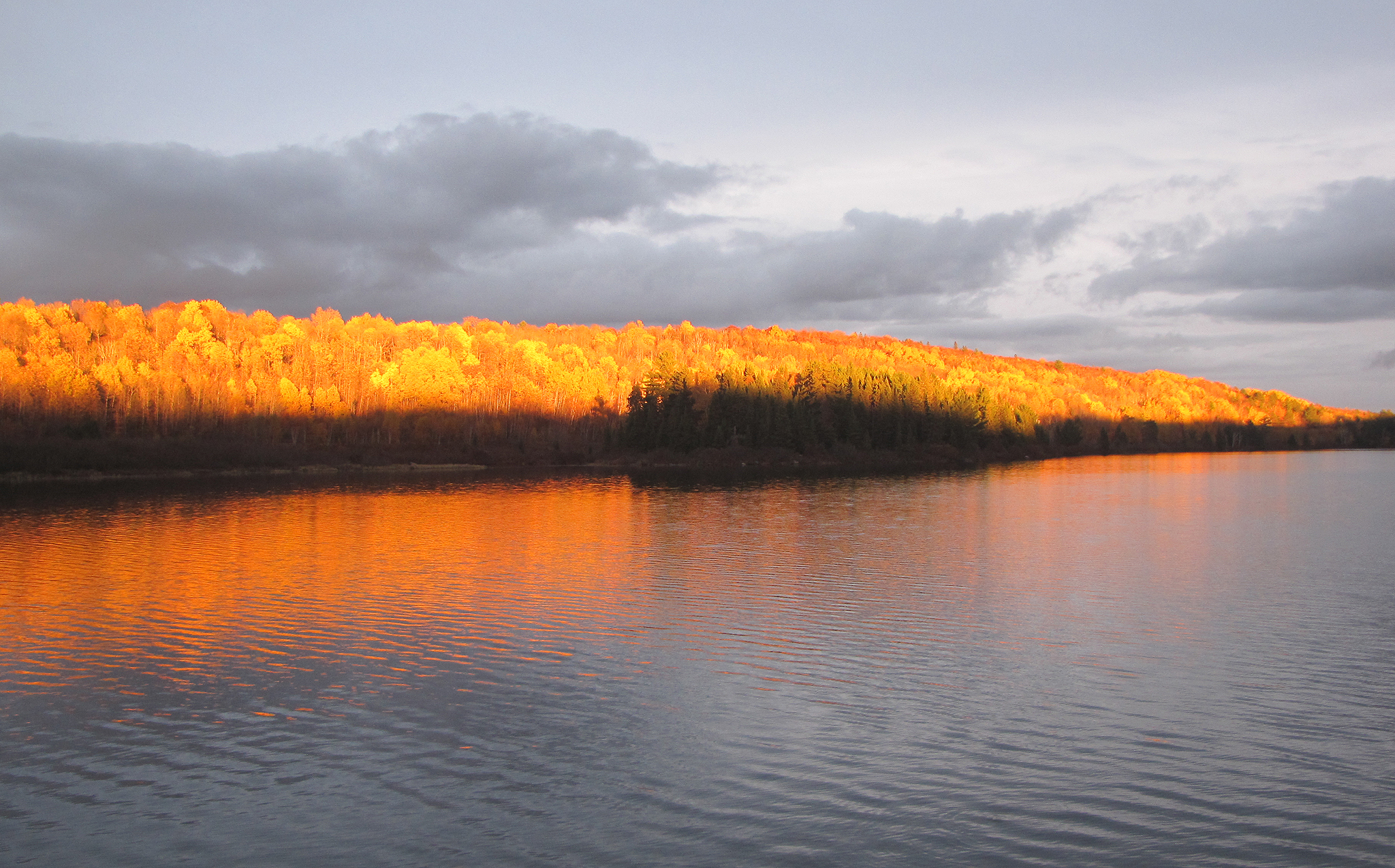
Like previous days, the fall colours were in full swing. Our last portage of the day was a 440 metre from Cauchon Lake into Mink Lake that crossed the abandoned railroad track. We paddled alongside the railbed until we came to a site right beside the railbed on Mink’s eastern shore. We can only imagine what it would’ve been like to camp out here if the train went by in the middle of the night.
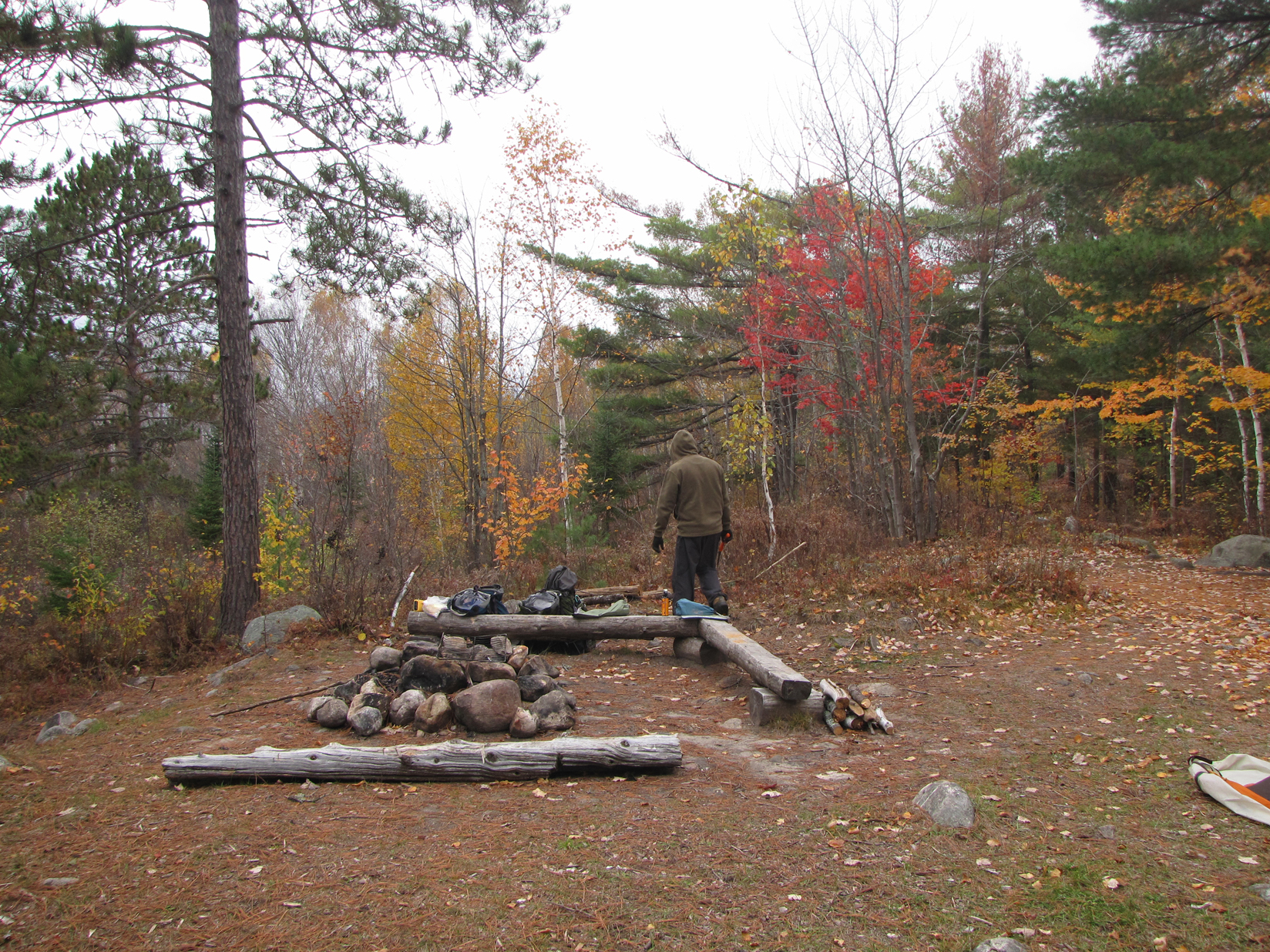
While making camp we had the minor annoyance of a few Blackflies. We made a big fire and as we enjoyed our last night in Algonquin we heard the call of a moose in the distance. Tomorrow we paddle back to the Kiosk launch.
Wildlife Sightings: Red Squirrel, Common Raven, Common Loon, Red-breasted Nuthatch, Belted Kingfisher, People, Golden-crowned Kinglet.
Remember to: No remember today!
DAY # 6: Mink Lake to Kiosk
Weather: Sunny. High: 6C
We didn’t sleep well last night because we were leaving today, and of course emotions are mixed as we don’t want to leave but at the same time we were getting pretty antsy being this close to the launch and not wanting to get wind bound.
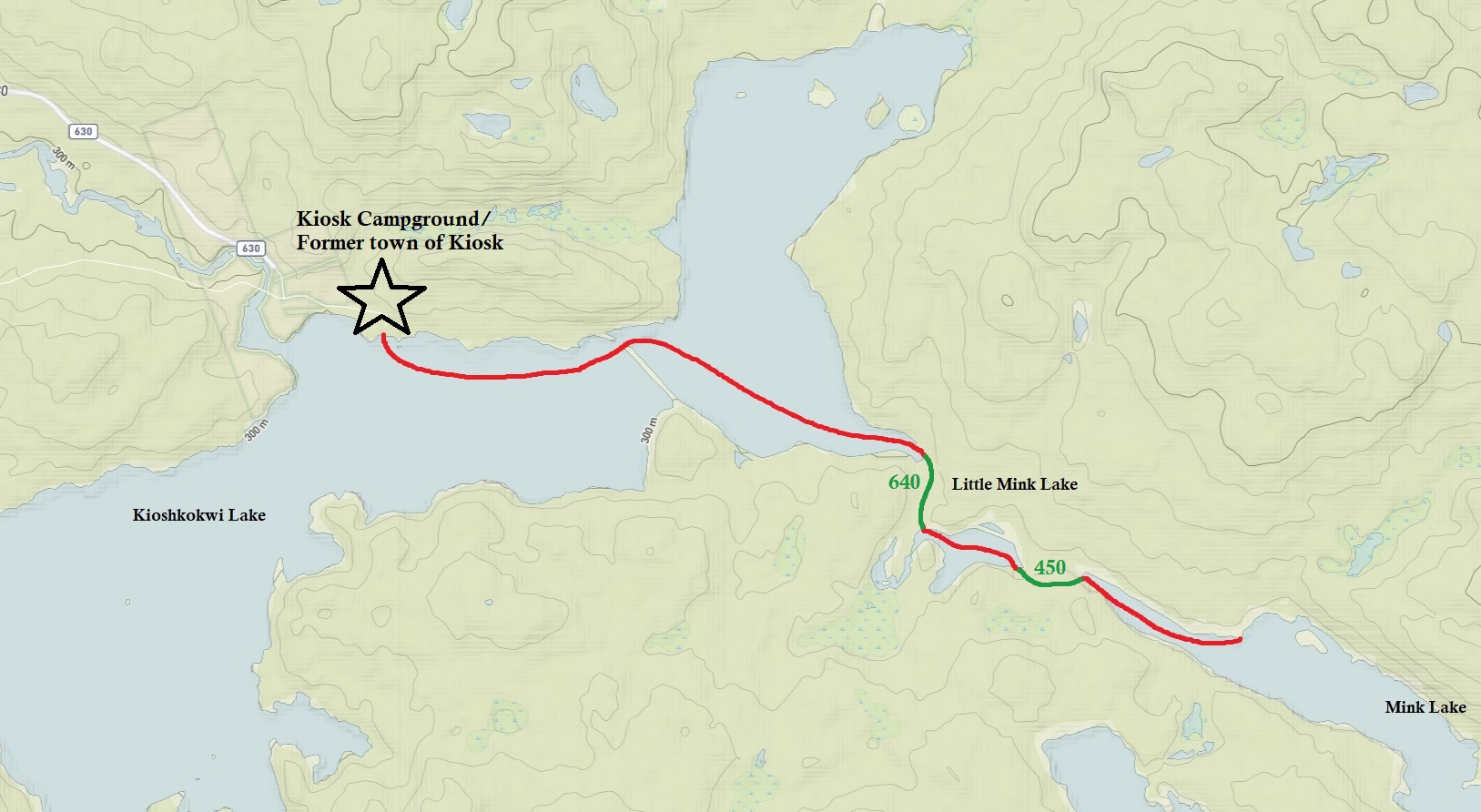
We paddled to the western end of Mink Lake and after a 450 metre from Mink Lake to Little Mink Lake and a 635 metre from Little Mink Lake to Kioshkokwi Lake we finished our last two easy portages of the entire trip. As we entered Kioshkokwi Lake we were happy to see that the winds were not bad at all while the morning sun lit up the fall colours all around us. We wished we could stay out a few more days and our strokes slowed down a bit to soak in as much as we could before arriving back at the Kiosk campground.
It turned out that fall is definitely our favourite time of year to backcountry camp! You don’t sweat as much, there are less bugs, and you can have a more leisurely paddle instead of racing to campsites like you may have to in the summer. In fact, on this whole trip we didn’t see one site occupied! It felt like the whole park was ours! We will be back Algonquin!
Click The Link For More Trip Reports: http://www.backcountrybalkwills.com
 Backcountry Balkwills